Posts

Leadership Series I: How to Promote a Culture of Belonging

Image
“It’s only when diverse perspectives are included, respected, and valued that we can start to get a full picture of the world, who we serve, what they need, and how to successfully meet people where they are.”  ~ Brene Brown  The reckoning of racial justice protesters from the turbulent summer of 2020 has made many of us question our roles and wonder how effective we have been in combating systemic racism in the United States. Many of us have even been asking ourselves whether we have an unconscious bias towards certain groups of people. Many companies have taken an active role by stepping back and reflecting on systemic racism. Corporations have gone above and beyond to publish statements on the big three: Diversity, Equity, and Inclusion (DEI). Many have taken an active role by revisiting their business practices, bylaws, strategic goals, and delivery models to demonstrate their seriousness about DEI. On LinkedIn, there has been a surge of senior level positions advertised ...
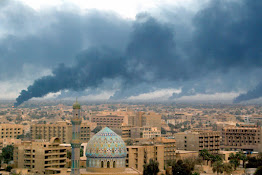
Unearthed Trauma and Double Standards Regarding the DC Insurrection

Image
Smoke covering Baghdad, Iraq on April 2nd, 2003. This past Wednesday (January 6 th ) was a day that many Americans will never forget. It was one of those defining moments in time, where years later you recall where you were and how you felt as you watched the events unfolding. However, in my case those events unearthed a range of buried emotions and past trauma, the sort of thoughts one must let out, as they eat away at you if you imprison them within your head. To set the scene, at midday I had decided to take a break from work and do my usual 6-mile afternoon run—a ritual I developed years ago, which acts as my daily ‘therapy’ session with nature and my own body. Unfortunately, on my second mile as I jogged along while enjoying my music, my serenity was interrupted with a stream of blaring police sirens. Now living in DC, I am used to the usual sirens that come with living in the nation’s capital, but the magnitude of these were different, and much louder because of their high nu...

What Has Traveling Solo Meant for me?

Image
  “You must be brave!” These are some of the words I am told regularly followed by an awed look. My addiction to traveling began with my first adventure, where I quickly learned to love the world. It all started when I made travel plans with a group of classmates in graduate school for a month getaway in Italy and Egypt. Everyone flaked out of the plan as we got closer to the travel dates and I was forced to embark on the journey alone. So full disclosure, I became a solo traveler out of necessity, rather than by choice. My desire to travel the world started after reading the book,  Three Cups of Tea: One Man’s Mission to Promote Peace .    If you haven’t read the book, it’s by the mountain climber, Greg Mortenson, who shares his incredible transition from life as a nurse to a mountain climber and humanitarian committed to reducing poverty and elevating the education of little girls in both Pakistan and Afghanistan. Mortenson, who attempted to climb K2, the world’s s...

Things I've Learned

Image
I’ve learned that you cannot make someone love you. All you can do is be someone who can be loved. The rest is up to them; I’ve learned that no matter how much you care, some people just don’t care back; I’ve learned that it takes years to build up trust, and only seconds to destroy it; I’ve learned that you can get by on charm, for about fifteen minutes. After that, you’d better know something; I’ve learned that either you control your attitude or it controls you; I’ve learned that no matter how hot and steamy a relationship is at first, the passion fades and there had better be something else to take its place; I’ve learned that sometimes the people you expect to kick you when you’re downhill are the ones to help you get back up; I’ve learned that true friendship continues to grow, even over the longest distance. Same goes for true love; I’ve learned that just because someone doesn’t love you the way you want them to doesn’t mean that they don’t love you with all they have; ...

Ramadan: Preparing Patients with Diabetes for a Better Fast

Image
During the month of Ramadan, Muslims practice an act of worship to build empathy for the world’s less fortunate, for whom hunger is not a choice. Muslims get a chance to reflect, deepen spiritually, and strengthen bonds with family and friends. Ramadan is divided into three parts, each of which consists of ten days. The first ten days are referred to as the mercy days; where Muslims seek God’s mercy and share it with others, especially towards family-bondage. The second ten days are forgiveness days, where Muslims seek forgiveness and repentance and make amends for their mistakes. Finally, the very last ten days of Ramadan symbolize emancipation from hell fire and it is here where Muslims spend their last ten nights in solid devotion and exert themselves even more in worship. Ramadan is not about starving one’s self for 16 hours from sunrise to sunset during the exhausting heat of summer nor is it a mechanism to lose weight. Restraining from food or drink during the summer heat becomes...

Addressing Cultural Competency: Healthcare for Refugees & Minority Populations

Fatima, mother of eleven children, had watched as her town in northern Kurdistan was turned from a small river community into a combat zone. With foreign armies marching through her city and one son taken into captivity, her family fled to a refugee camp in the bordering region. Years of economic sanctions and multiple home displacements had already made life difficult. So when Fatima learned of an opportunity to move to the United States, she knew it was a chance for a better life. Departing her homeland was no easy decision, it was a last resort to save her family. For Fatima, family stability was the ultimate goal — to travel across the ocean to America was the only possibility of providing it, along with good health. Once in the U.S., her adult children traveled by bus to factory jobs and took English classes on the weekends. Her younger children thrived in the public-school system. Still, Fatima struggled to support her family because the culture, language and people were so unfam...

The Implicit Bias in Delivering Healthcare

Our human brain, the most powerful organ in the universe, is just remarkable! Humans are constantly striving to understand what we don’t already know. As a species, we remain unsatisfied to accept things the way they are, so we strive to be informed and make judgement  from our existing knowledge. If something doesn’t match or mesh with a particular presumption, we intrinsically attempt to bridge the gap between what we know and what we want to know. As healthcare providers, we often assume our clinical judgement based on clinical standards of care; a criteria that we are trained with as healthcare providers. For example, if a patient is prescribed but fails to take mediation, we are trained to assume that the patient is not compliant. Our judgment about a patient starts the moment they walk through our door, as we begin to assess not just their overall health, but how forthcoming or accurate they are about their history. Our mind is readily able to fill in all kinds...